
The Project Management Professional (PMP)® certification has long been the gold standard for project managers globally. However, as the global business landscape transitions toward rapid digital transformation and volatile markets, the Project Management Institute (PMI) has fundamentally restructured the PMP examination.
This version change is not merely a syllabus update; it is a paradigm shift from process-driven management to value-driven leadership.
1. Moving Beyond the "Waterfall": The Agile/Hybrid Mandate
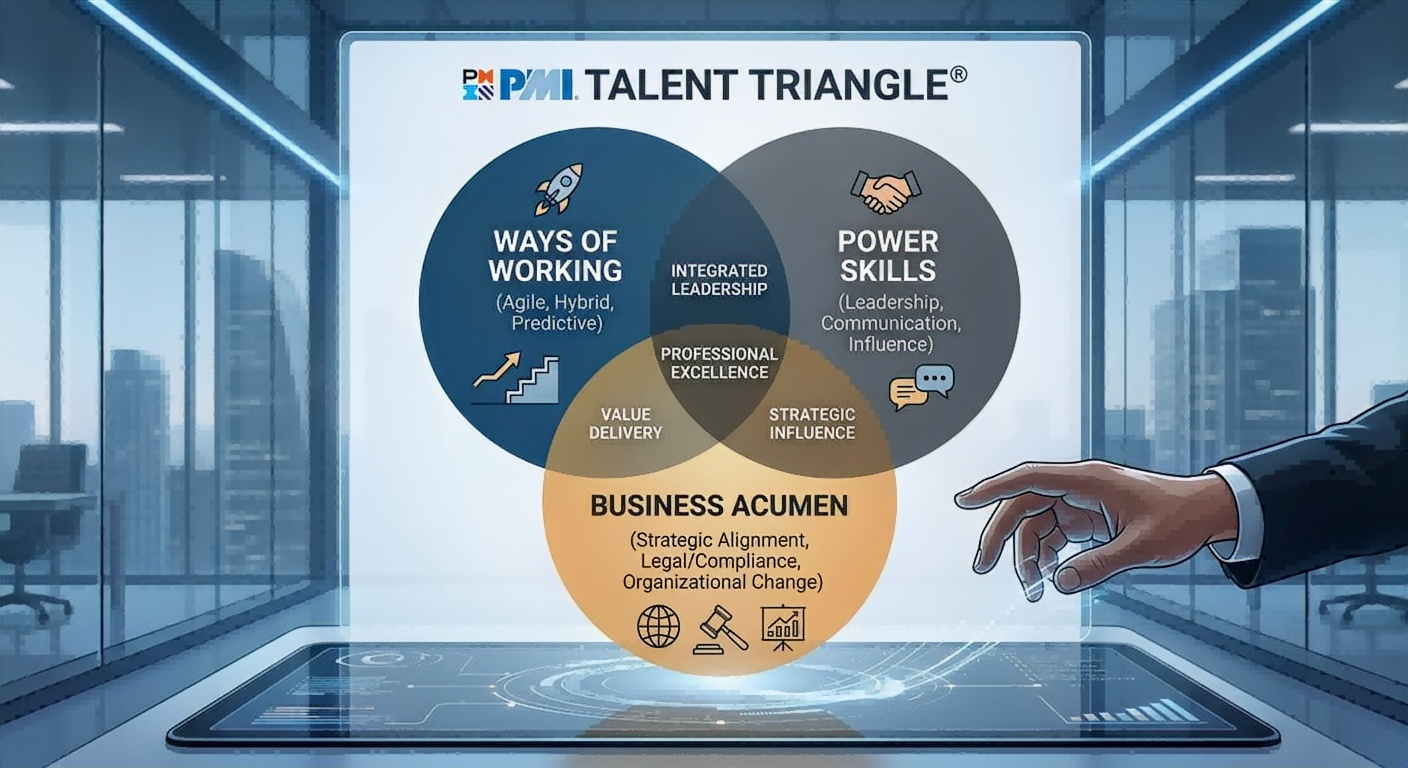
Historically, the PMP exam was heavily anchored in predictive (Waterfall) methodologies, emphasizing rigorous planning and strict change control. The current iteration of the exam decisively bridges this gap by allocating 50% of its content to Agile and Hybrid methodologies.
This change reflects the reality of modern enterprises. Project managers are no longer just administrators of Gantt charts; they are expected to seamlessly pivot between predictive planning for hardware deployments and iterative, agile sprints for software development. Understanding how to tailor the approach to the project's unique context is now a mandatory competency.
2. The Shift to Principle-Based Delivery (PMBOK 7th Edition)
The release of the PMBOK® Guide – 7th Edition marked a departure from the traditional 10 Knowledge Areas and 49 Processes. Instead, the new framework focuses on 12 Project Management Principles and 8 Project Performance Domains.
Consequently, the PMP exam questions have evolved to become highly situational and behavior-based. Candidates are tested on their soft skills (Power Skills)—such as servant leadership, navigating cognitive biases, and empowering teams—rather than their ability to memorize formulaic inputs and outputs.

3. Aligning with Enterprise Business Value
Perhaps the most crucial addition to the new exam version is the Business Environment domain. Project managers are now evaluated on their ability to ensure that project deliverables directly align with the organization's strategic objectives. You must demonstrate an understanding of compliance, organizational change management, and continuous value delivery.
Elevate Your Career with the New Standard
The updated PMP exam is undoubtedly more challenging, as it requires practical wisdom rather than rote memorization. However, it also makes the credential significantly more valuable to employers. By mastering the new Agile frameworks and principle-based leadership skills, you are positioning yourself as a versatile, modern leader capable of driving complex enterprise initiatives.
Ready to upgrade your project management skills? Connect with our training consultants today to ensure your preparation aligns perfectly with the latest PMP Examination Content Outline.